
/api/hooks surface: it registers the
hooks that fire a tool when an event arrives, binds a
verifier to a topic’s public ingress door, and
mints trigger links — public
QR URLs that fire a topic on a scan.
Every hook and every trigger link fires under a bound execution key: the api-key
identity the dispatch runs as. The picker is the same on both forms, and it is a
required field on each — a fire never runs as “nobody”.
Register a hook
The Register hook form names the topic to listen on and the tool to fire, then binds the execution key that fire runs as. Name, topic, tool, and the execution key are required; tool kwargs, a condition, and an expr are optional.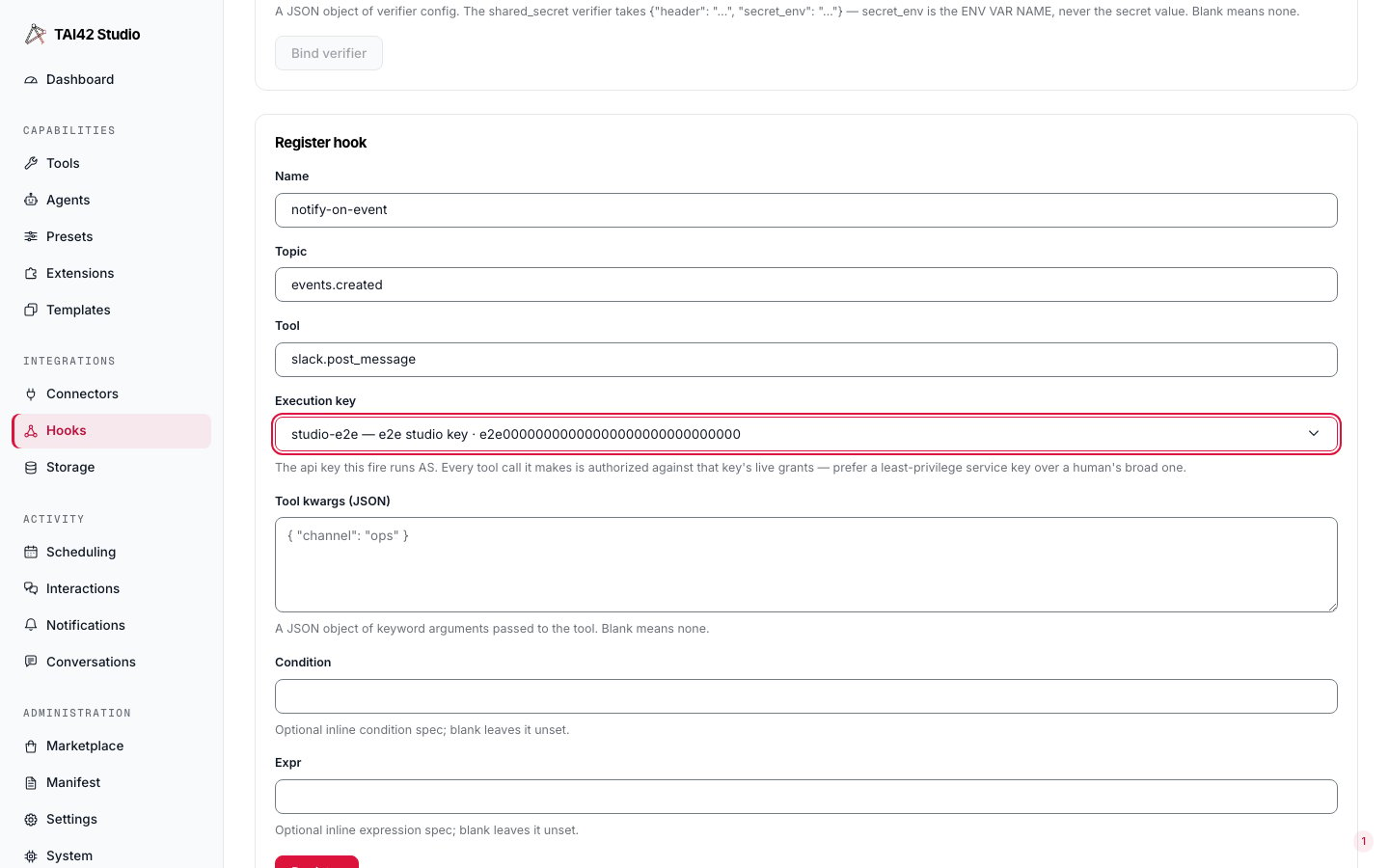
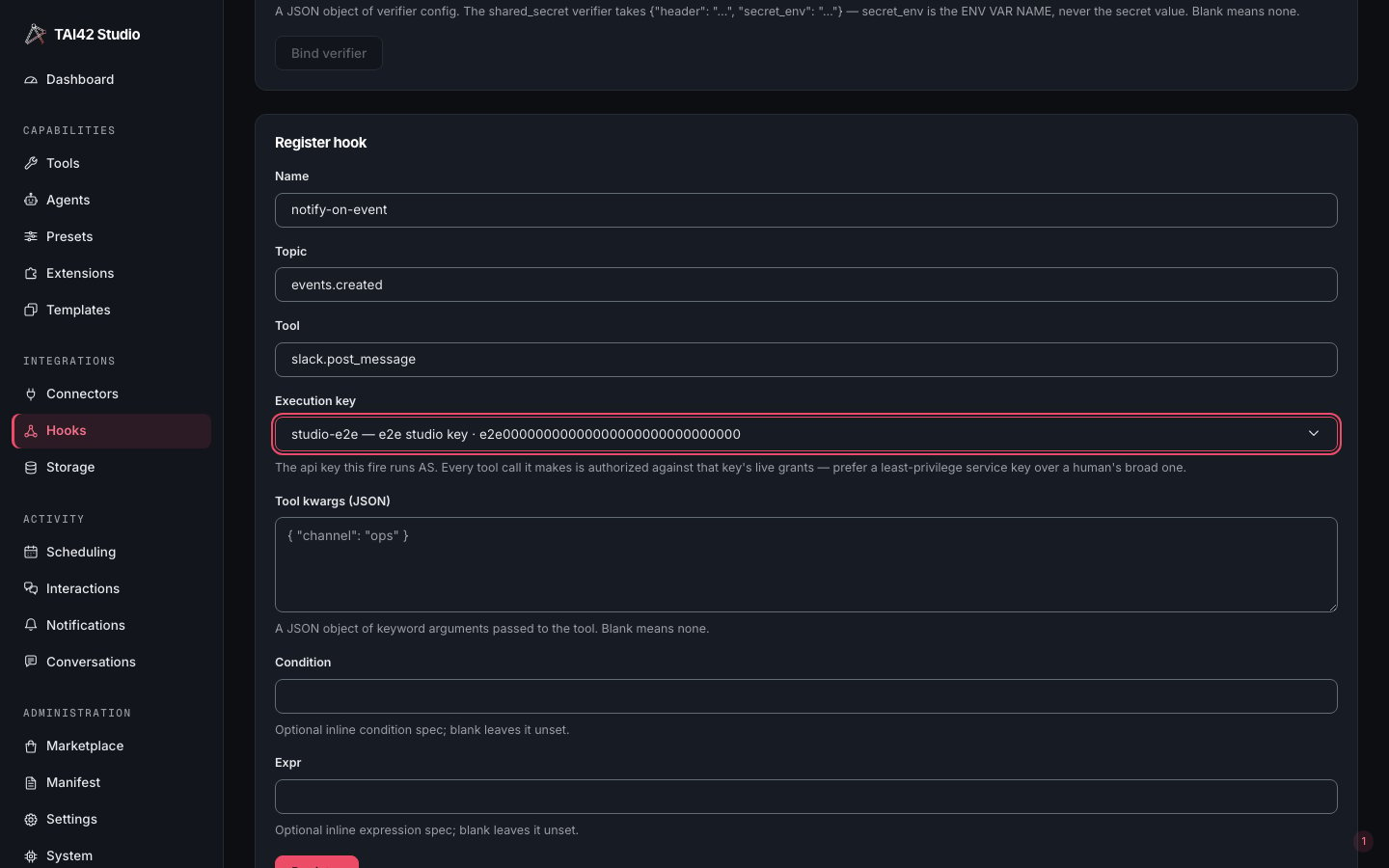
The Register hook form: the required execution-key picker binds the api-key identity each fire runs as.
The binding is to the key’s fingerprint, not just its id. Revoking the key kills
every hook and link bound to it, and re-minting the same id does not revive the
binding — the fingerprint changes, and a fire against the stale binding is denied, not
run as the new key. See owned keys for the delegation model.
When the tool-run store is configured, every hook and
trigger-link fire is recorded like a background run — it lists in that tool’s
Recent background runs on the Tools screen, gettable by run id.
Edit or remove a hook
Every registered hook lists in a table, and each row carries an Edit and a Delete control. Edit opens the same form prefilled from that hook, titled Edit hook; saving it is a true update over the register door — the button reads Save changes — not a delete-and-recreate. A hook edited through an inline field keeps any id-bound condition or expr gate it carried, so touching the topic or tool never silently drops a gate you set by id. Delete opens a confirm dialog and unregisters the hook by name; it is immediate and cannot be undone. Binding a verifier to the topic is the adjacent Bind verifier form. It is admin-only: ahooks-write role registers hooks and mints links but is fenced out of
setting or removing a topic’s verifier. See
fire a tool from a webhook for the verifier flow.
Mint a trigger link
A trigger link is a minted, public URL —GET /trigger/<token> — that fires a topic’s
hooks on a bare request, printable as a QR code. The Create trigger link button
opens a dialog that takes the topic, an optional name, the execution key, an
Also require an api key toggle, an expiry (there is no default — choose one), and
optional tool params. On success the dialog renders the link’s QR, shown once.
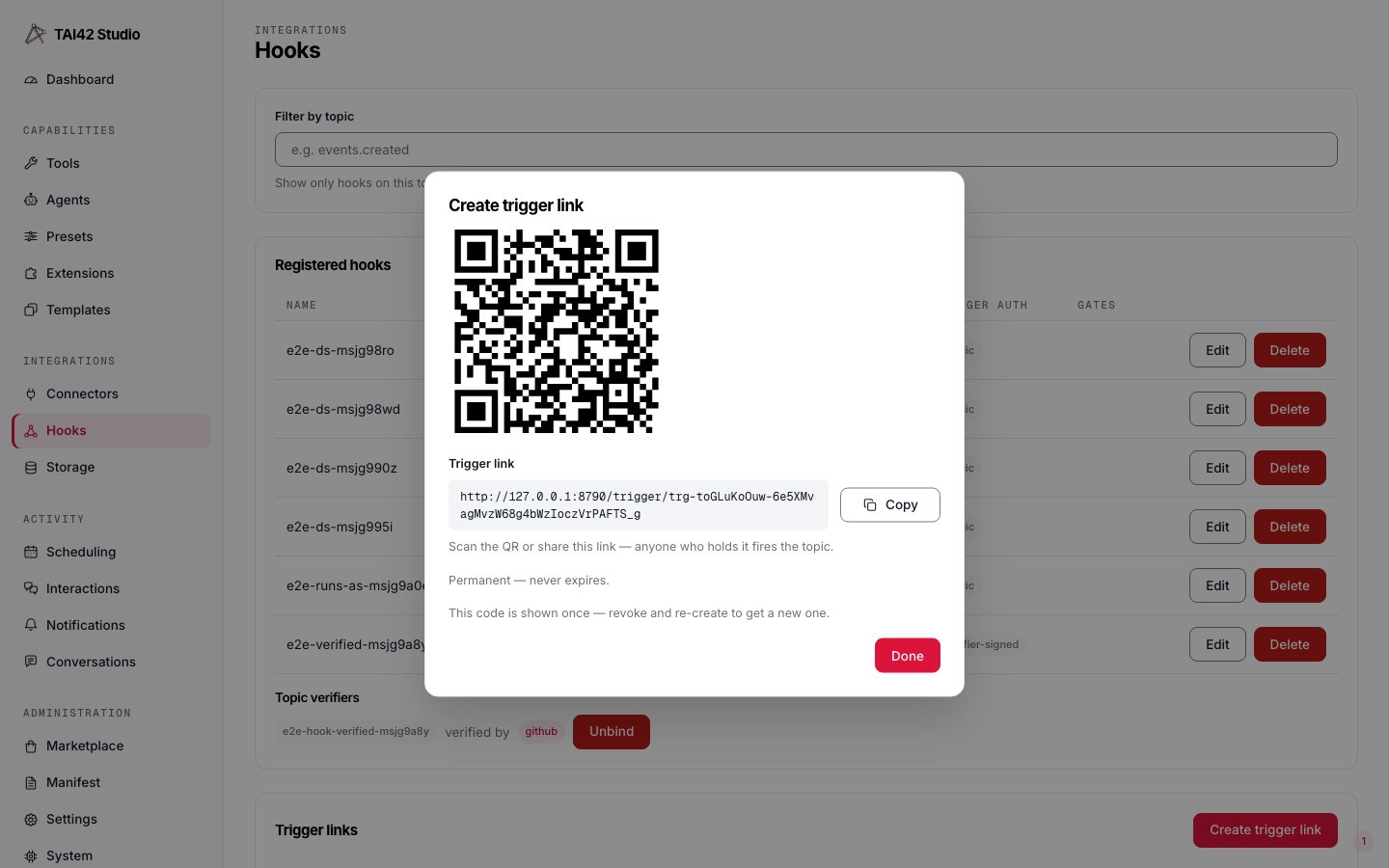
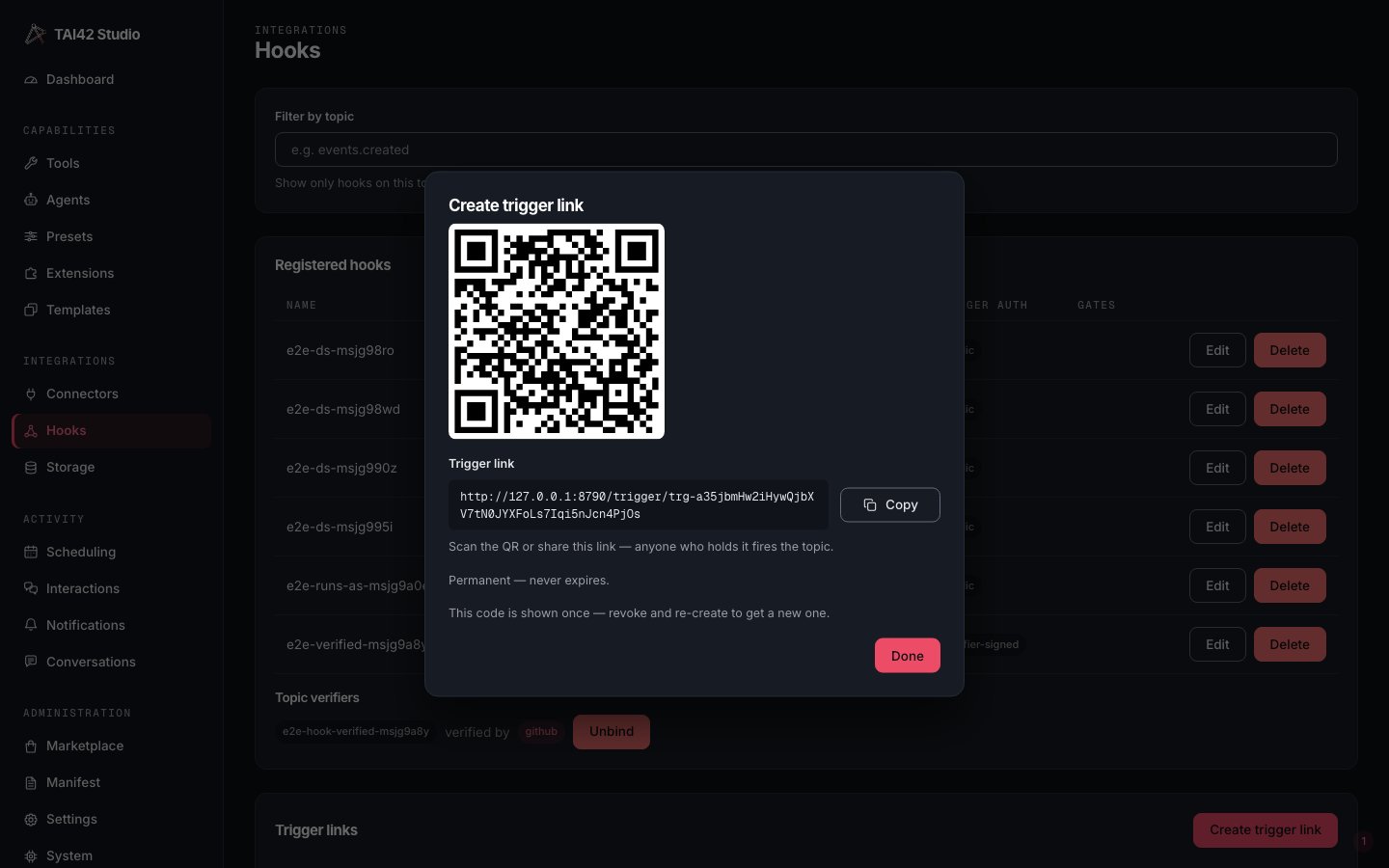
The Create trigger link dialog mints a public QR bound to an execution key; the QR is shown once.
/universal_webhook/{topic} door.
The trigger-auth type
The trigger-links table lists each live link with its name, topic, bound execution key, expiry, a params indicator, the token’s hash prefix, and a trigger-auth cell naming how that door reads. The value is server-derived from the live bindings, never a stored flag:
Revoke a link from its row’s revoke-confirm — immediate and durable, and a restored
backup cannot re-arm it. The token is shown once at creation and never stored, so a
listed link’s QR is unrecoverable; to rotate a code, revoke and mint a new one.
See hooks for the dispatch model,
fire a tool from a webhook for the full
binding-and-condition workflow from the CLI, and the
tai hooks reference for the command surface.